February 16–17, 2027 · Beijing, China

International Exhibition for
Young Inventors (China)

IEYI China 2027 — Beijing

"IEYI + ITCCC: Inspiring Teenagers to Create, Cooperate and Contribute"

National Speed Skating Oval "Ice Ribbon", Beijing (tentative)
Registration: Nov 20 – Dec 31, 2026
How to Enter
Registration Opens
Nov 20, 2026
Registration Closes
Dec 31, 2026
China Exhibition
Feb 16–17, 2027 · Beijing

About IEYI

The International Exhibition for Young Inventors (IEYI) was founded in 2004 to inspire young people's passion for creativity worldwide and to strengthen exchange and cooperation among young people from countries and regions around the globe. The first IEYI was held in Tokyo, Japan, on the occasion of the 100th anniversary of the Japan Institute of Invention and Innovation (JIII). To date, IEYI has grown into a major international academic exchange for young people, with nearly 40 member countries and regions.

2004
Founded in Tokyo
~40
Member countries & regions

IEYI in China

In 2016, with the strong support of the Harbin Municipal Government, ITCCC Innovative Education organized that year's IEYI International Exhibition. Young people from more than 10 member countries and regions gathered in the Ice City, sparking creative ideas. The exhibition achieved outstanding educational outcomes and an excellent international reputation, and China has since joined the IEYI international family as a formal IEYI member.

In 2026, co-hosted with the support of the National Aquatics Center (the Water Cube), the 22nd IEYI International Exhibition was held in Beijing, China. Nearly 200 teams from more than ten countries and regions took part and exchanged ideas on site — a milestone on the road to IEYI China 2027.

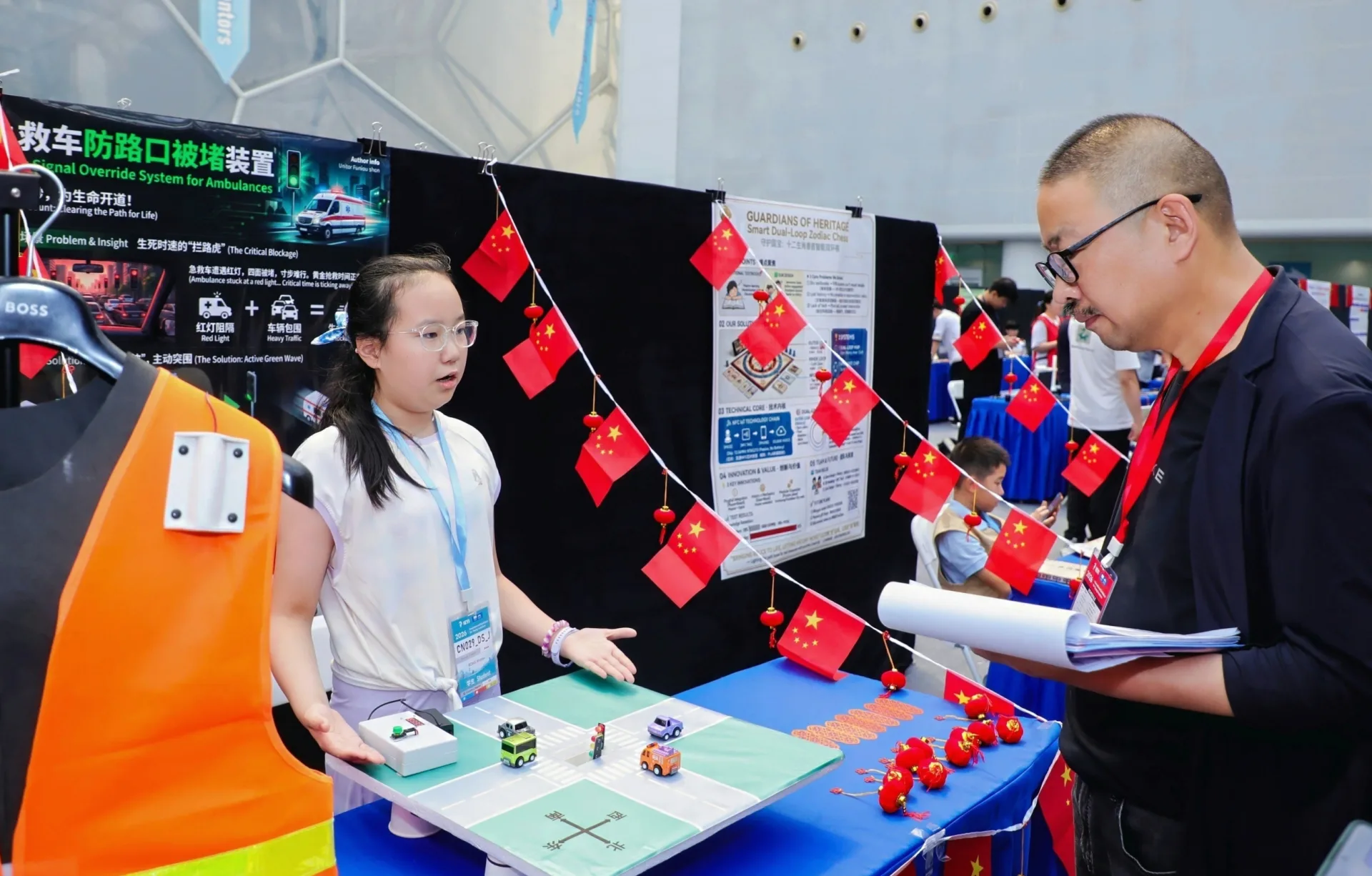
A judge reviews a young inventor's project on site at IEYI 2026 Beijing
IEYI 2026 · Beijing On-site judging at the National Aquatics Center
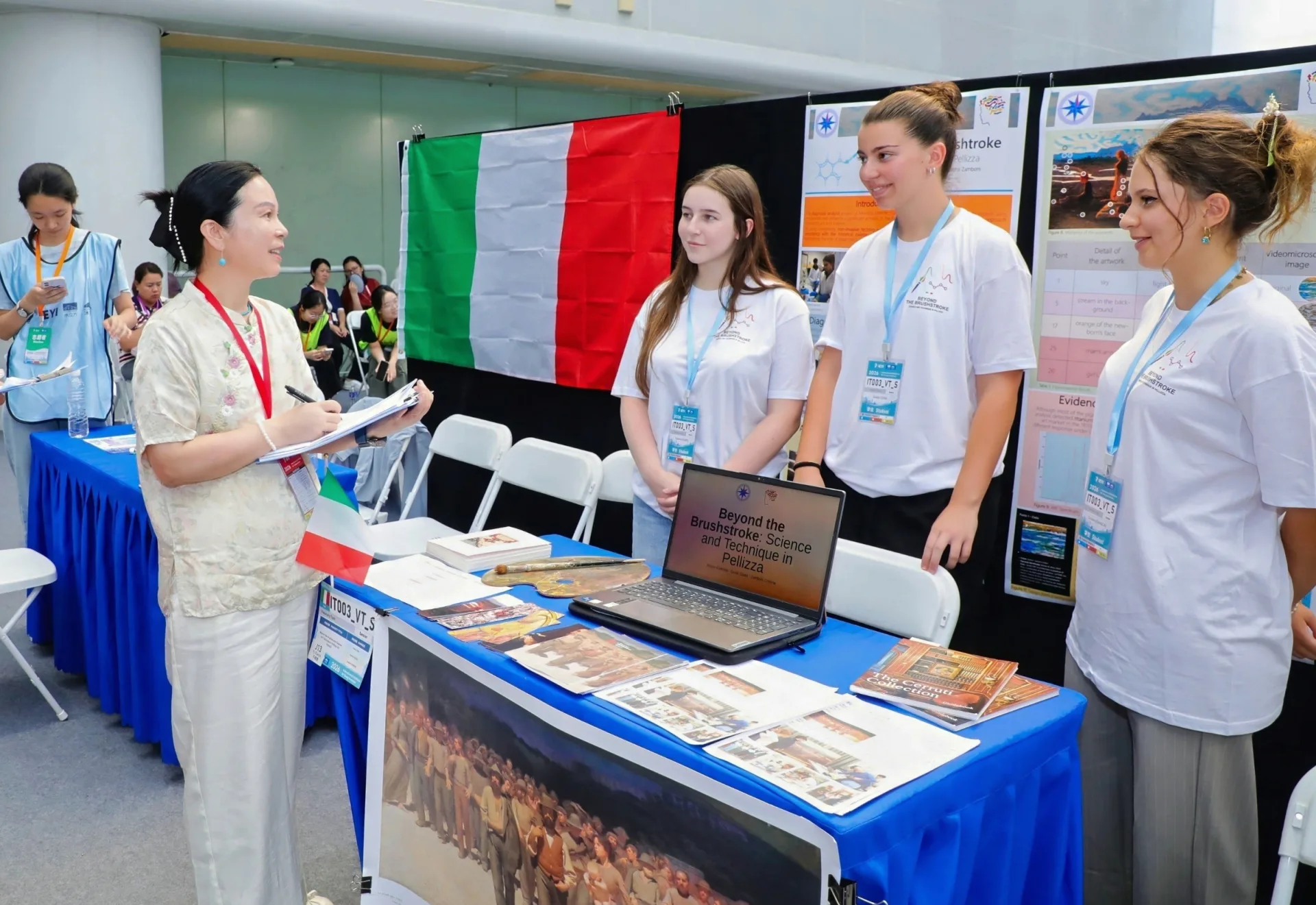
Team Italy presents their project to a judge at IEYI 2026
Global Exchange
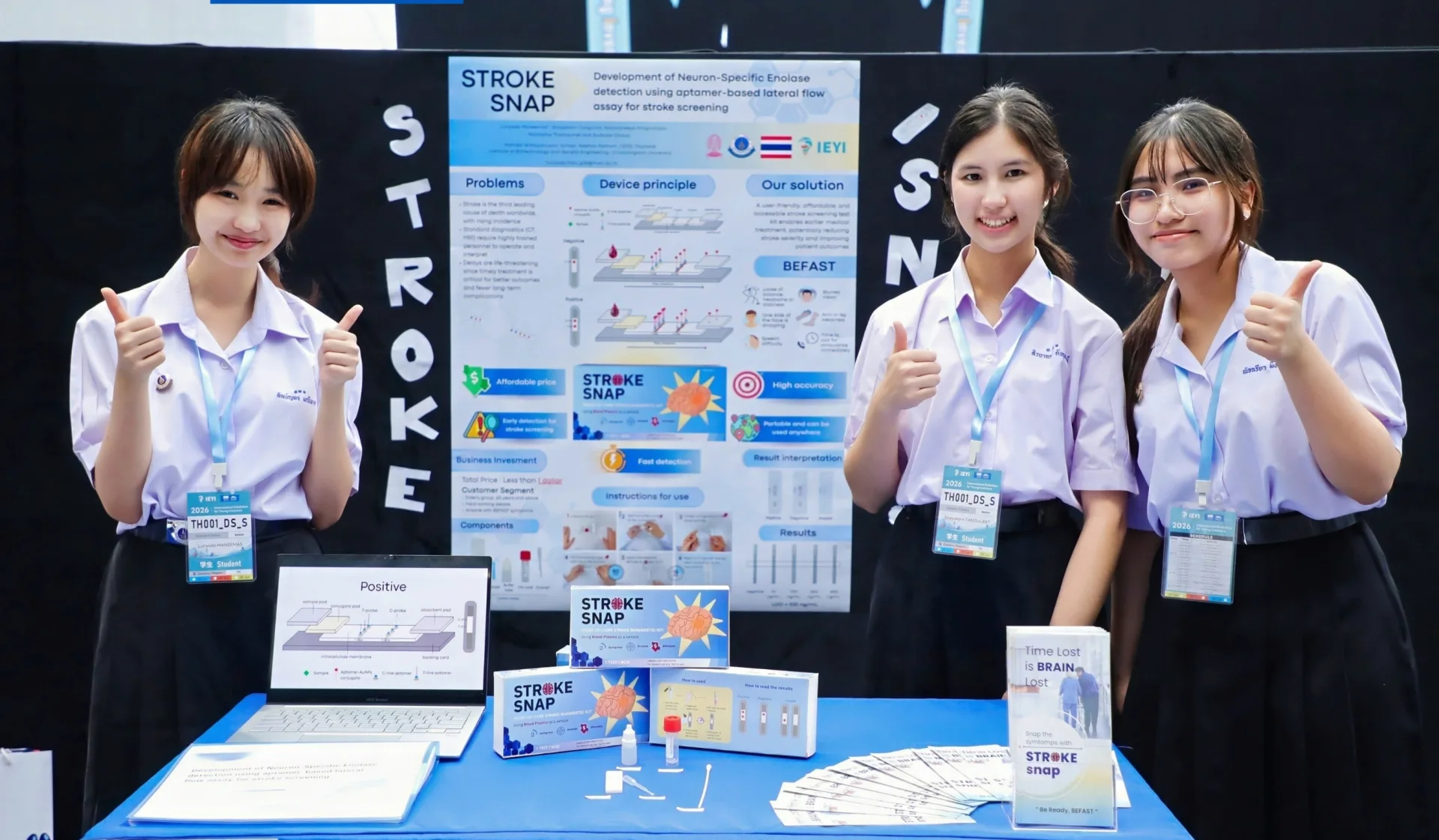
A student team presents their invention at IEYI 2026
Young Innovators
View the IEYI 2026 Event Album

Create

Stimulate scientific thinking and foster core competencies in critical thinking, problem-solving, and design knowledge through hands-on invention.

Cooperate

Build bridges between young minds from nearly 40 countries and regions through international teamwork, mutual learning, and cross-cultural exchange.

Contribute

Inspire creative approaches to invention that serve society, enhance cultural exchange, and contribute to a sustainable, innovative future.

Awards at the China Exhibition

Award levels are determined by an entrant's overall ranking among all entries at the IEYI China Exhibition.

💡 Invention Awards

🥇
Gold Award
Top 10% of all entries
10%
🥈
Silver Award
11%–30% of all entries
20%
🥉
Bronze Award
31%–50% of all entries
20%
🎖
Honorable Mention
51%–70% of all entries
20%
📜
Participation
71%–100% of all entries
30%

🎨 Artwork Awards

🥇
Gold Award
Top 10% of all entries
10%
🥈
Silver Award
11%–30% of all entries
20%
🥉
Bronze Award
31%–50% of all entries
20%
🎖
Honorable Mention
51%–70% of all entries
20%
📜
Participation
71%–100% of all entries
30%
🌍

Special Awards

Special Awards may also be presented by participating countries, regions, or organizations. Specific requirements shall be those set out in the registration notice for the year concerned.

Entry Requirements

Entries are divided into two categories: Invention and Artwork.

Basic Requirements

  1. 1Each entry must fall under one of the designated categories.
  2. 2Entries must be safe and pose no risk of harm to people or the environment. Entries containing explosive, corrosive, combustible, or poisonous substances are prohibited.
  3. 3Entries may not include any living organisms and must comply with the quarantine standards of the country or region concerned.
  4. 4Entries must not belong to the field of basic scientific research (for example, inventions involving living organisms in the biological field are not permitted) or to the field of pure art (for example, poetry, songs, fiction, paintings, sculptures, and similar works are not permitted).
  5. 5Invention entries must be accompanied by an explanation video of 3–5 minutes, shot in landscape orientation, with clear audio and no background noise. All team members must appear on camera.
  6. 6For the Invention category, the same rule applies at the China Exhibition and the International Exhibition: teams of no more than three members may register and submit an entry.

Invention Categories

Invention entries must be registered in one of the following six categories.

🚨

Disaster Management / Safety & Health

  • Disaster Management: Inventions that help detect and/or prevent natural disasters, or that support post-disaster management (for example, systems, technologies, products, and the like).
  • Safety & Health: Inventions that contribute to safety and health (for example, devices, systems, and practical solutions).
🎮

Entertainment & Sports / Education

  • Recreation & Sports: Inventions that enhance recreational activities (for example, sports, entertainment, and the like).
  • Education: Inventions that are useful in the classroom and other educational settings.
  • Mechanical Performance Works: Inventions that combine ingenious mechanisms and innovation with entertainment to delight the audience.
🌾

Sustainable Agriculture Technology

  • Inventions that improve the quality of agricultural practices or address modern food-safety issues. This category applies only to inventions in the form of systems, technologies, or products — not to food itself.
  • ※ Living organisms should not be used.
♿

Social Care

  • Inventions intended to improve convenience and accessibility for minorities or individuals with special needs (for example, children, persons with a particular condition such as a disability, and persons of a particular socioeconomic status).
  • Inventions that help improve convenience for older persons and address their particular needs.
🏠

Convenient Living

  • Inventions that improve the convenience of everyday life (for example, cleaning tools, kitchen tools, and the like).
🤖

Visionary Technologies

  • Green Technology & Sustainability: Inventions that promote sustainability, reduce pollution, and improve energy efficiency and environmental protection.
  • Inventions that use aerospace technology, artificial intelligence (AI), and/or the Internet of Things (IoT).

👥 Groups at the China Exhibition — Invention

  • › Elementary School Group (grades 1–6)
  • › Secondary School Group (grades 7–12)

Groups are determined by the oldest member of the team.

📋 Forms of Participation

  • › Invention entries may be submitted by an individual or by a team (each team may have no more than three members).

📐 Materials and Specifications — Invention

  • • Weight & size: The entry shall weigh no more than 10 kilograms, and its length and width shall not exceed 100 cm × 100 cm (there is no height limit). If the actual size exceeds these limits, the author must prepare a miniature model to explain the purpose and function of the entry. Entries with special space requirements (for example, a bicycle) must be specially indicated.
  • • Programs / hard-to-exhibit entries: If the entry is a computer program, is made of materials that are inconvenient to exhibit, or has an effect that cannot be sustained, the author must use other means (for example, a PowerPoint presentation, a video, or other supporting materials) to explain the purpose, process, and model of the invention.
  • • Power: If the entry requires electricity, the author must bring a portable power bank. Power is not provided at the exhibition booths.
  • • Handouts: Authors may use handouts (no larger than A4) or brochures to present and explain the entry.
  • • Materials: During the on-site exhibition, entries will be displayed to the public. Authors may choose materials according to the needs of the invention. The materials selected must not be hazardous. Perishable materials or living organisms are not permitted.

Artwork Category

Theme: "Science of Tomorrow"

Give full play to your imagination and, taking "Science of Tomorrow" as the theme, use artwork to present the future world as you envision it. You may consider and express the following:

1. The overall appearance of the future world
  • What will life and society be like in the future?
  • How will people live, learn, work, and travel in the future world?
2. Future science and technology
  • Imagine what new technologies and inventions we will have in the future.
  • How will these new technologies change our everyday lives?
3. The impact of future technology on the environment and cities
  • How will cities change in the future? What will be different about architecture, transportation, energy, communications, and other aspects?
  • How will new technologies help us protect the environment and achieve sustainable development?

Create boldly. Draw a creative scene of the future that clearly expresses your understanding and imagination of "Science of Tomorrow."

🖼 Artwork Specifications

  • • B4 drawing paper (38 cm × 27 cm)
  • • The work shall be presented in 2D form
  • • Any type of drawing tool may be used (for example, paints, crayons, markers, and the like). The work must be hand-drawn. Digital tools are not accepted. The artwork must be original
  • • Please attach a title and a brief description (no more than 300 words) to the artwork
  • • The work must not infringe copyrights or portrait rights
  • • The content must be wholesome and consistent with social and ethical standards

❌ Not Accepted

  • • Digital art or computer-generated images
  • • Work that infringes copyrights or portrait rights
  • • Entries inconsistent with social and ethical standards

👥 Groups & Forms — Artwork

  • › Lower Elementary Group (grades 1–3)
  • › Upper Elementary Group (grades 4–6)
  • › Secondary School Group (grades 7–12)

Artwork entries may be submitted only by an individual. Groups are determined by the entrant's grade.

Safety

The materials of an entry must be sufficiently durable. Hazardous materials (including fragile materials), perishable materials, or living materials are not permitted.

Technical Relevance

Pure art or basic scientific research projects are not permitted.

Originality

If the entry holds a patent, a detailed presentation and explanation may be given.

Completeness

Authors should provide a complete presentation of the purpose, creative process, and operation of the entry.
Submission Checklist

Note: If an entry is registered through the online system, the attachments listed below are for reference only; uploading and signing must be completed directly in the system.

💡 Invention — materials to be submitted

  1. a. Entry Information Form — Invention (Appendix 2)
  2. b. Explanation video, with the following requirements:
    • – 3–5 minutes
    • – Chinese or English
    • – Shot in landscape orientation
    • – Clear audio, with no background noise
    • – All authors appear on camera
  3. c. IP Assurance Letter (Appendix 3; print and sign by hand)

🎨 Artwork — materials to be submitted

  1. a. Entry Information Form — Artwork (Appendix 1)
  2. b. Photograph of the artwork (JPG format)
  3. c. IP Assurance Letter (Appendix 3; print and sign by hand)

Judging Criteria

Judging is conducted by a number of experts from various fields. The scoring rubrics below are provided for reference.

⛔ Qualification Review — Invention Overall Award

  • 1. Is this entry a scientific-principle experiment (including animals or plants)?
  • 2. Is this entry a work of pure art (containing no technological component)?
  • 3. Is this entry hazardous (for example, explosive, combustible, poisonous, or corrosive)?

If any of the above is "Yes," the entry is disqualified from this exhibition and will not be evaluated on the invention criteria below.

💡 Invention Overall Award

Creativity

40%
  • Functional Novelty13%
  • Novelty of Craftsmanship12%
  • Novel Application of Scientific Properties13%
  • Patentability (invention patent 2% · utility model 1% · none 0%)2%

The patent certificate must bear the name of the advisor or a participant.

Marketability

30%
  • Environmental Friendliness10%
  • Market Demand5%
  • Social Contribution5%
  • Appearance5%
  • Refinement / Craftsmanship5%

Usability

30%
  • Ease of Operation10%
  • Structural Stability10%
  • Overall Integration10%
※ Note: The total score given by each judge will be converted into a ranking. The judging panel will discuss and determine the overall score of each invention on the basis of ranking scores, not raw scores.

🎨 Artwork Overall Award

Scoring Criteria Description
Comprehensive Evaluation (40%) A comprehensive evaluation of the student's artwork and presentation, with particular emphasis on the ability to depict future scientific and technological progress and the advancement of scientific knowledge.
Creativity (30%) Novelty of the concept.
Composition (30%) Artistic value (color, form, texture, line, space, structure, sense of three-dimensionality, etc.).
Other Awards & Honors: In each round of the Preliminary Round, the China Exhibition, and the International Exhibition, special category awards or Special Awards may also be presented on site, in addition to the Overall Awards. The specific judging and rules shall be those published by the organizer of the session concerned.

Important Dates & Program

February 15–18, 2027 · Beijing, China

Stage Venue Dates
China Exhibition Beijing, National Speed Skating Oval (tentative) February 16–17, 2027

Feb 15 (Mon)

Day 1 — Arrival

Teams Arrive in Beijing

  • Teams arrive in Beijing, China
  • 15:00–18:00 — Team Check-in & Registration (Designated Hotel)

Feb 16 (Tue)

Day 2 — Exhibition & Judging

Opening Ceremony & First Day of Judging

  • 08:30–09:00 — Door open
  • 09:00–10:00 — Opening Ceremony
  • 10:00–12:00 — Booth Setup / Team Interaction & Exchange
  • 12:00–14:00 — Lunch & Break
  • 14:00–17:00 — Exhibition & Judging
  • 17:00–18:00 — Place restoration

Feb 17 (Wed)

Day 3 — Awards

Award Ceremony & Closing

  • 08:30–09:00 — Door open
  • 09:00–11:00 — Award Ceremony & Closing
  • Free time

Feb 18 (Thu)

Departure

Teams Depart

Departure day.

Note: Specific schedules for each session are subject to the official notice for that session. Program above is tentative.

Registration

Registration is organized uniformly through IEYI China certified partners (schools or institutions).

IEYI + ITCCC · Inspiring Teenagers to Create, Cooperate and Contribute

Ready to join IEYI China 2027?

Registration period: Nov 20, 2026 – Dec 31, 2026. All required documents must be uploaded to the official collection system and the Registration Form sent to the official email before Dec 31, 2026, Beijing time (GMT+8).

Who Can Participate

Contestants must be students between 6 and 19 years old — from elementary schools, junior high schools, senior high schools, vocational high schools, or other equivalent schools.

How to Register

All information must be submitted in English by the designated regional organizer. Teams submit project information through the online collection system, plus contact person, project and team member details, and full delegation member information in the Registration Form.

Entry Limits

IEYI China 2027 is anticipating a total of 300 entries. Each country and region should generally limit itself to 10 entries (including art); additional entries should be consulted with ITCCC. Each participant cannot be in multiple teams at the same time.

Certificates

Contestants and advisors should provide their official Romanized names (spelled using the English alphabet), as shown on their passport. Digital award certificates are issued in English and can be downloaded from the certificate system.

Registration Fee

Fee policy: The first 3 teams from each country or region are exempt from the registration fee. For each additional team beyond this limit, a registration fee of 150 US dollars per team will be charged.

🎓

Students

The registration fee includes lunch on Feb 16 and Feb 17, medals, digital certificates, and admission tickets.

🧑‍🏫

Team Leaders

Each submitted work must be associated with one Team Leader. Team leaders must register in the dedicated system. Tickets to the venue and lunch are not included; souvenirs are not included. Venue tickets and lunch may be purchased separately in advance.

👨‍👩‍👧

Parents

Parents must register in the dedicated system. Venue tickets and souvenirs are not included; lunch is not included. Venue tickets and lunch may be purchased separately in advance.

Contact Us

Have questions about IEYI China 2027? Our team is here to assist you.

Venue (Tentative)

National Speed Skating Oval "Ice Ribbon"
Beijing, China

Organizer

IEYI China Organizing Committee
Conveyed by: ITCCC Innovative Education

IEYI History & Archive

Looking Back at IEYI 2026 Beijing

Relive the 22nd IEYI International Exhibition at the Water Cube — browse the event archive and the official results of all 178 award-winning projects.